Your uPVC windows are looking tired. Maybe the white has yellowed, the colour has faded, or the style just feels dated. Either way, you're weighing up two options: replace them entirely, or have them professionally sprayed.
Both are valid choices — but they're not equal in every situation. This guide breaks down the real costs, the pros and cons, and the honest truth about when spraying makes sense and when replacement is the better call.
We're a uPVC spraying company, so yes — we have skin in the game. But we also turn work away when spraying isn't the right solution. This guide reflects what we actually tell homeowners during our free assessments across Birmingham and the West Midlands.
What Does It Actually Cost? A Real Comparison
Let's start with the numbers. These are based on a typical three-bedroom semi-detached house in the Birmingham area with 8–10 windows, a front door, and a back door.
| uPVC Spraying | Full Window Replacement | |
|---|---|---|
| Typical cost | £1,200 – £2,000 | £5,000 – £10,000+ |
| Time to complete | 1–2 days | 1–2 weeks |
| Disruption | Minimal — exterior work only | Significant — scaffolding, interior mess, redecorating |
| Guarantee | 10 years (Spray Genius) | 10–20 years (manufacturer dependent) |
| Planning permission | Not required | Usually not required (but check conservation areas) |
| Colour options | Any RAL, BS, or custom colour | Limited to manufacturer range |
For most homeowners, the cost difference is the headline: spraying typically saves 70–80% compared to full replacement. On a semi in Solihull or Sutton Coldfield, that can mean keeping £5,000–£8,000 in your pocket.
But cost alone shouldn't drive the decision. The question is whether your windows actually need replacing — or whether they just need to look like they've been replaced.
When uPVC Spraying Is the Right Call
Spraying is the smart choice when your windows are structurally sound but cosmetically past their best. That covers the majority of properties we visit.
Here's when we'd recommend spraying:
Your frames are in good condition. The uPVC isn't warped, cracked, or structurally damaged. Locks and hinges work. Seals are intact. The double glazing hasn't blown (no misting between panes). The only real problem is how they look.
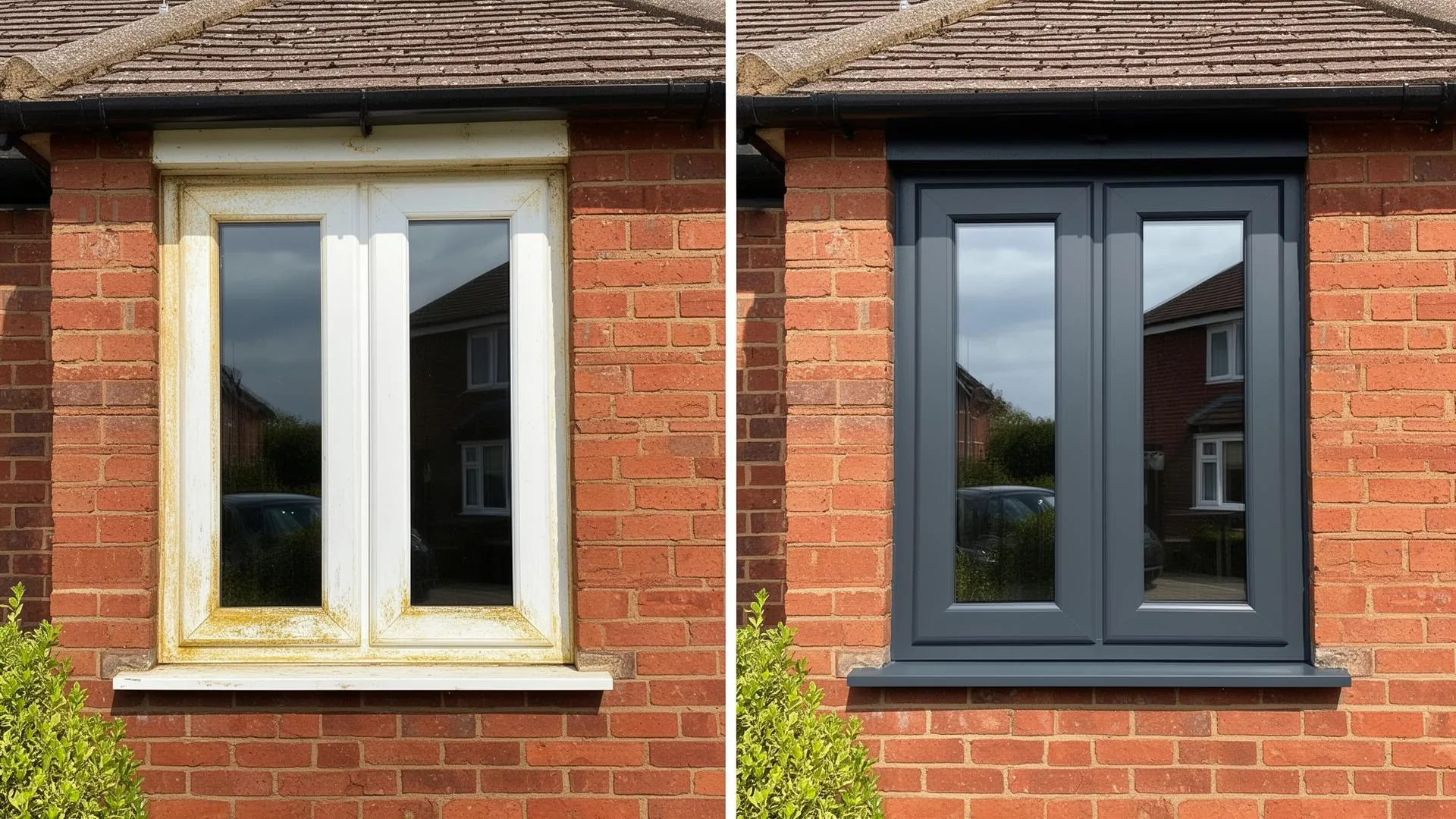
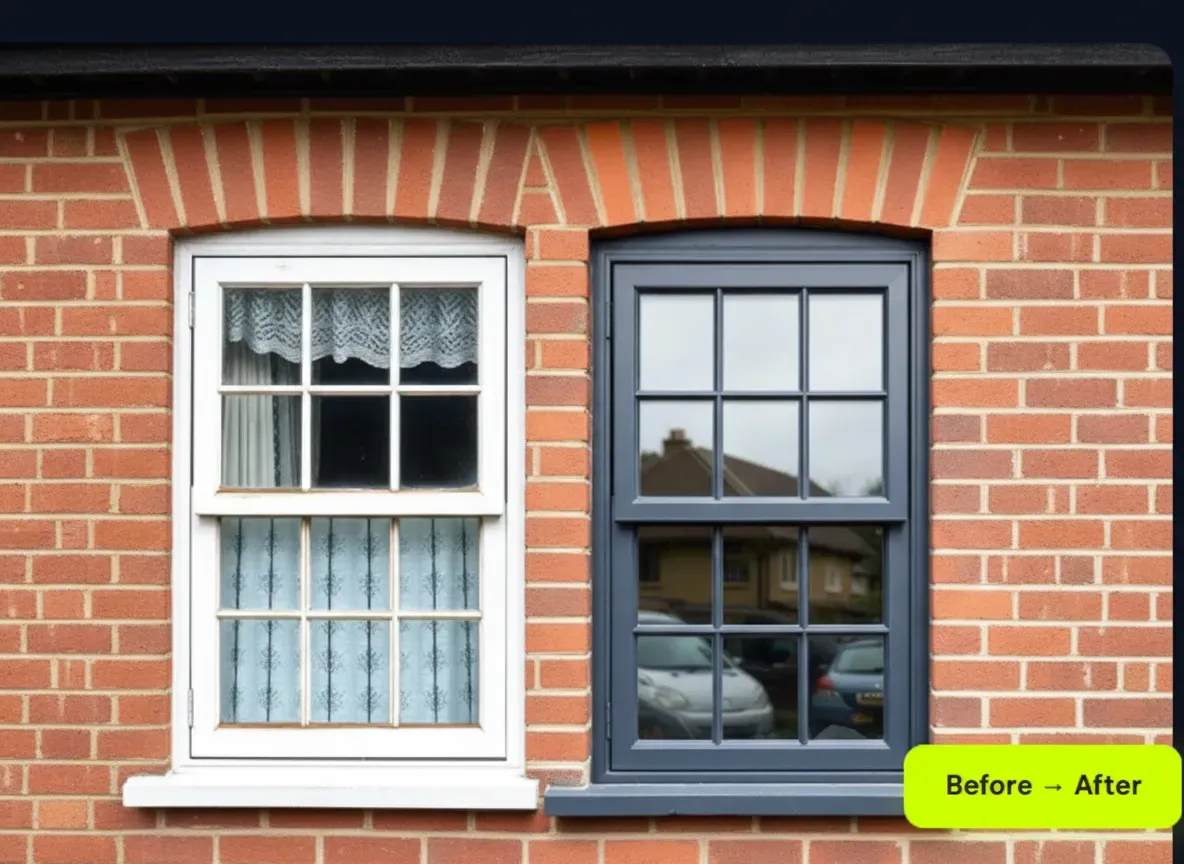
You want to change colour. White uPVC was the default for decades, but tastes have moved on. Anthracite Grey, Agate Grey, and Black are far and away the most popular choices in 2026. Spraying lets you pick from the full RAL colour chart — over 200 shades — rather than the handful most window manufacturers offer as standard.
You want a fast result with minimal disruption. A full house can usually be completed in a single day. There's no scaffolding, no dust inside, no replastering around new frames, and no redecorating. We work outside, and you carry on as normal.
You're improving kerb appeal before selling. If you're preparing a property for sale, spraying delivers one of the highest visual impacts per pound spent. Fresh, modern-looking windows can transform the entire front of a house for under £2,000.
Your property is in a conservation area. Replacing windows in conservation areas often requires planning permission and specific styles. Spraying changes the colour without altering the window units, so it falls outside planning restrictions.
You care about sustainability. Spraying reuses your existing frames rather than sending them to landfill. Manufacturing new uPVC windows is energy-intensive. If your frames are sound, spraying is the greener option by a wide margin.
Not Sure If Spraying Is Right for Your Windows?
Book a free assessment. We'll inspect your frames, give you straight advice, and provide a fixed-price quote — no obligation.
When You Should Replace Instead
We'd be doing you a disservice if we pretended spraying is always the answer. It isn't. Here's when we'd recommend replacement:
Your double glazing has failed. If you can see condensation or misting between the glass panes, the sealed unit has blown. You can replace individual glass units without changing the frames — but if multiple windows are affected, it may signal that the frames are at end of life too.
The frames are warped or cracked. uPVC expands and contracts with temperature over the years. If frames have visibly bowed, cracked, or pulled away from the brickwork, spraying won't fix the underlying problem.
Locks, hinges, or handles are failing across the board. Individual hardware can be replaced, but if the locking mechanisms are failing on most windows, the frames themselves may be worn to the point where new units make more sense.
Your windows are single-glazed. If you still have single glazing (increasingly rare, but it happens), replacement is the right move. The energy savings from modern double or triple glazing will justify the investment over time.
You want to upgrade to triple glazing for thermal performance. Spraying changes how your windows look — it doesn't change their thermal properties. If heat loss is your primary concern and your current windows have poor U-values, new windows with modern glazing will deliver measurable improvements to your energy bills.
When we visit for a free assessment, we check all of this. If spraying isn't suitable, we'll tell you — and we won't charge you for the visit.
How Long Does uPVC Spraying Actually Last?
This is the question we get asked more than any other, and it's fair — you want to know your investment will hold up.
When applied professionally with correct preparation and high-quality 2K polyurethane coatings, a uPVC respray lasts 10 to 15 years. That's not a marketing figure — it's based on the chemistry of the coatings and the real-world performance of jobs completed across the industry over the past decade.
The key factors that affect longevity:
Preparation quality. This is where corners get cut — and where cheap jobs fail. Every surface must be thoroughly degreased, abraded to create a mechanical key, and primed with a specialist adhesion promoter before any colour goes on. Skip any of these steps and the coating will peel within a few years.
Coating system. We use 2K (two-component) polyurethane topcoats. These chemically cure to form a cross-linked polymer surface that's UV-stable, scratch-resistant, and impervious to weathering. This is the same class of coating used in automotive refinishing. Single-pack paints and cheap alternatives do not offer the same performance — not even close.
Application method. Professional HVLP (High Volume Low Pressure) spray equipment delivers a smooth, even film build with no brush marks, drips, or orange peel. The finish is virtually indistinguishable from factory-applied colour.
Exposure. South-facing elevations take more UV punishment. Coastal properties face salt air. These don't prevent spraying from being effective, but they're factors we account for during assessment. In most cases across Birmingham and the West Midlands, they're not a concern.
We guarantee all our work for 10 years. If anything goes wrong with the coating in that time — peeling, flaking, discolouration — we come back and put it right at no cost.
What Does the Process Look Like?
If you've never had uPVC sprayed, you might be wondering what the day actually involves.
1. Assessment and quote. We visit your property, inspect the condition of the frames, discuss colour choices, and give you a fixed-price quote on the spot. No hidden extras.
2. Preparation. On the day, we mask all glass, brickwork, sills, and surrounding areas. Every frame is degreased and abraded to create the perfect surface for the coating to bond to. Any minor scratches, chips, or surface damage are repaired.
3. Priming. A specialist adhesion primer is applied. This is the critical layer that bonds the topcoat permanently to the uPVC substrate. Without it, no topcoat will last — this is where DIY attempts and cheap operators fail.
4. Colour application. Multiple coats of 2K colour are applied using professional HVLP equipment. Each coat is allowed to flash off before the next is applied, building up a smooth, even, durable finish.
5. Inspection and clean-up. We remove all masking, inspect every frame, and clean up thoroughly. You can see and touch the finish the same day, though full chemical cure takes around 7 days.
The whole process takes one day for most homes. We work outside, so there's no mess indoors and no need to move furniture or clear rooms.
The Most Popular Colours in 2026
If you've decided to spray, the next question is always: what colour?
Based on the jobs we're completing across Birmingham, Solihull, Sutton Coldfield, and the wider West Midlands, these are the colours homeowners are choosing right now:
- Anthracite Grey (RAL 7016) — The runaway favourite. A deep, contemporary charcoal that works with virtually every brick colour and property style. Probably accounts for 40–50% of all jobs we complete.
- Agate Grey (RAL 7038) — A softer, lighter grey for homeowners who want a modern update without going as dark as anthracite. Pairs beautifully with lighter brickwork and render.
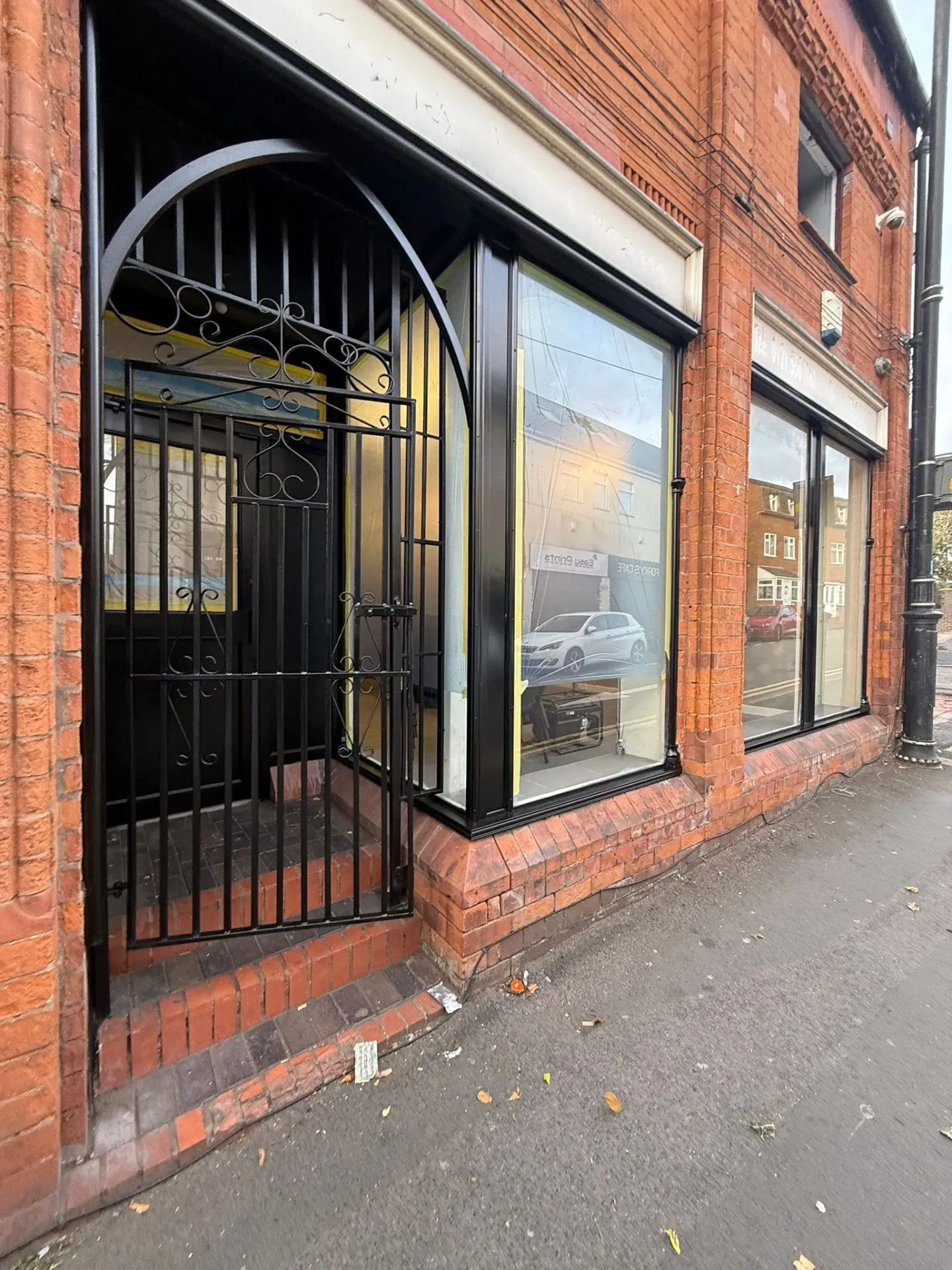
- Black (RAL 9005) — Bold and striking. Increasingly popular on period properties and new builds alike.
- Chartwell Green — A heritage-inspired sage green. Popular on properties in leafy suburbs and rural areas around the Midlands.
- Cream White (RAL 9001) — For homeowners who want to keep a classic look but with a warmer, richer tone than standard white uPVC.
We can match any RAL colour, any British Standard shade, any Farrow & Ball colour, or even colour-match to a physical sample you provide. If you've seen a colour you like on someone else's house, send us a photo and we'll identify it.
Ready to Choose Your Colour?
We can match any RAL, Farrow & Ball, or custom shade. Get a free quote and we'll help you pick the perfect colour for your property.
"But Can't I Just Paint Them Myself?"
We get it — a spray can from B&Q costs a tenner and YouTube makes everything look easy.
Here's the reality: DIY uPVC painting is one of the most common botched home improvement jobs we're asked to fix. Standard household paint — even "multi-surface" products — does not bond permanently to uPVC. Without the correct adhesion primer system, it peels. Without proper surface preparation, it flakes. Without professional spray equipment, it looks uneven, patchy, and amateur.
A professional spray finish uses completely different chemistry and equipment to anything available at a DIY store. The coatings we use cannot be bought off the shelf and require specialist application training.
If you want a finish that looks factory-applied and lasts a decade, professional spraying is the only route that delivers it.
Frequently Asked Questions
Do I need planning permission to have my windows sprayed?
No. Spraying doesn't alter the structure of the window — it changes only the surface colour. This falls outside planning requirements, even in most conservation areas.
Will the colour match if I add new windows later?
Yes. Because we spray to specific RAL codes, any future windows can be ordered or sprayed in exactly the same shade.
Can you spray just the front of the house?
Absolutely. Many homeowners choose to spray only the street-facing windows and front door to maximise kerb appeal while keeping costs down.
What if it rains on the day?
We monitor weather forecasts carefully and will reschedule if conditions aren't suitable. The coatings need dry conditions during application and initial curing.
Do you spray window sills and trims as well?
Yes — sills, trims, and any visible uPVC surfaces are included as standard.
Can you spray coloured uPVC, not just white?
Yes. We spray over existing colours including cream, rosewood, golden oak, and grey. The preparation process ensures the new colour bonds just as effectively.
What about garage doors, fascias, and conservatories?
We spray those too. Many homeowners bundle multiple items into a single visit for a uniform colour-matched look across the whole property — and bundling usually brings the per-item cost down. See our full uPVC spraying pricing guide for detailed costs.
The Bottom Line
If your uPVC windows are structurally sound but visually tired, spraying is almost certainly the better investment. You'll save thousands compared to replacement, get a factory-quality finish in any colour you choose, and have the job done in a day with zero disruption.
If your windows have failed glazing, warped frames, or broken mechanisms, replacement makes more sense — and we'll tell you that honestly when we visit.
Not sure which camp you fall into? That's exactly what our free assessment is for. We'll inspect your frames, give you straight advice, and provide a fixed-price quote with no obligation.